Only verified buyer and supplier
What is "Private Label" in Textiles?
/
A 5-Minute Read
How to Find a "Private Label" Manufacturer?

"Private label" refers to the practice where a manufacturer produces goods on behalf of another company or brand, and these products are offered for sale under the name, label, and brand identity of the ordering company. In Turkish, it can be expressed as "özel markalı üretim" (private brand manufacturing).
For instance, an apparel brand can have t-shirts manufactured by a textile producer without owning its own factory. The factory carries out the production; however, the product is offered for sale with the brand's label, logo, and packaging. Consequently, the consumer purchases the product as that of the respective brand, rather than the manufacturing facility.
The private label model can be utilized by various enterprises, ranging from startups wishing to establish a brand without setting up their own production facilities, to companies seeking to add new product categories to their existing collections. The extent to which the fabric, color, pattern, print, label, or packaging of the product can be customized varies according to the services offered by the manufacturer.
Therefore, finding the right private label manufacturer does not merely mean finding a factory capable of producing the desired item. The manufacturer's experience, minimum order quantities, capacity, quality standards, and customization capabilities must also align with the requirements of the brand.
So, how does private label manufacturing operate, and what aspects should you consider when identifying the right private label manufacturer for your brand?
1. What is the Role of the Brand and the Manufacturer in Private Label Production?
In the private label model, while the manufacturer carries out the physical production of the goods, the brand determines how the product will be positioned and presented to the market under its own brand identity.
The role assumed by the manufacturer may vary depending on the project. Some manufacturers offer customization on their existing products, such as labels, logos, or packaging, while others can also implement modifications in product details such as fabric, color, pattern, printing, and embroidery.
For example, a custom product can be prepared for a brand by altering the color, print, label, and packaging of a manufacturer's existing sweatshirt model. In a more comprehensive project, the brand may submit its own designs and technical specifications to the manufacturer.
For this reason, the mere fact that a firm offers "private label manufacturing" services is not sufficient information on its own. It is essential to ascertain which products they are capable of manufacturing, which details can be customized, and what information they require from the brand during the production process.
2. How Does the Private Label Manufacturing Process Work?
The process typically begins with the brand defining its product specifications. Information such as product type, fabric or material specifications, colors, dimensions, design details, estimated order quantity, and targeted delivery date are finalized.
Subsequently, manufacturers suitable for these requirements are researched. During discussions with the manufacturer, product feasibility, the sampling process, pricing, MOQ, production capacity, customization options, and lead times are evaluated. Once terms are mutually agreed upon, mass production commences following the sampling and approval phases.
From Texylon's perspective, establishing the right connection in private label manufacturing is not solely about locating a company that can manufacture the desired product. The brand's product expectations and order structure must align with the manufacturer's capacity and operational terms.
For this reason, when researching private label manufacturers, the criteria of experience, capacity, quality, and communication should be evaluated in the same manner as when selecting a reliable textile supplier.
3. What is the Difference Between Private Label, OEM, and ODM?
While researching private label manufacturers, one may also encounter the terms OEM and ODM. Although these concepts are interrelated, they differ in terms of the role the manufacturer assumes during the process.
In the OEM (Original Equipment Manufacturer) model, the product is generally manufactured in accordance with the design or technical specifications specified by the brand. The brand defines how the product should be; the manufacturer then executes the production in alignment with these requirements.
In the ODM (Original Design Manufacturer) model, however, the manufacturer assumes a more active role in the design and product development phases. The brand may offer an existing product developed by the manufacturer under its own label, or request specific modifications to the product.
Therefore, when researching manufacturers, it is more accurate to look at the actual scope of the service provided rather than relying solely on the definitions of "private label," "OEM," or "ODM." Some manufacturers facilitate the adaptation of existing products to the brand, while others may also provide production according to the brand's proprietary design or offer product development support.
4. What Should Be Considered When Selecting a Private Label Manufacturer?
First and foremost, the manufacturer's experience in the relevant product category must be evaluated. The fact that a factory manufactures ready-to-wear apparel does not imply they possess the same level of expertise in every product category. T-shirts, outerwear, sportswear, or technical textiles may require distinct areas of specialization.
Production capacity is also critical. A brand may initially operate with small orders but may require higher volume production as sales volume increases. Consequently, the manufacturer’s capacity to accommodate potential future orders, rather than just the current order, should be taken into consideration.
Sample quality, quality control approach, communication, and lead times should also be assessed. Particularly if sales are to be made to specific countries or customer demographics, the manufacturer's textile certifications and compliance with required standards must also be verified.
The objective is not merely to find a factory capable of producing the initial order, but to establish a sustainable business relationship with a manufacturer that aligns with the brand’s requirements.
5. Why is MOQ Important in Private Label Manufacturing?
In the selection of a private label manufacturer, the order volume can directly influence the commercial alignment between the brand and the manufacturer.
MOQ (Minimum Order Quantity) represents the lowest quantity of orders that a manufacturer is willing to accept for a specific product. For instance, the operational terms of a manufacturer accepting a minimum order of 5,000 units may not align with a brand wishing to produce 300 units.
Furthermore, MOQ may not be established solely for the total order. Distinct minimum quantities may also be applied per color or per style.
Therefore, when researching manufacturers, one should evaluate not only the price but also how MOQ is determined in textiles and how compatible the manufacturer's minimum order terms are with the brand's business plan.
In this regard, rather than merely seeking the lowest MOQ, it is crucial to identify a firm that possesses a production structure suitable for the volume required by the brand.
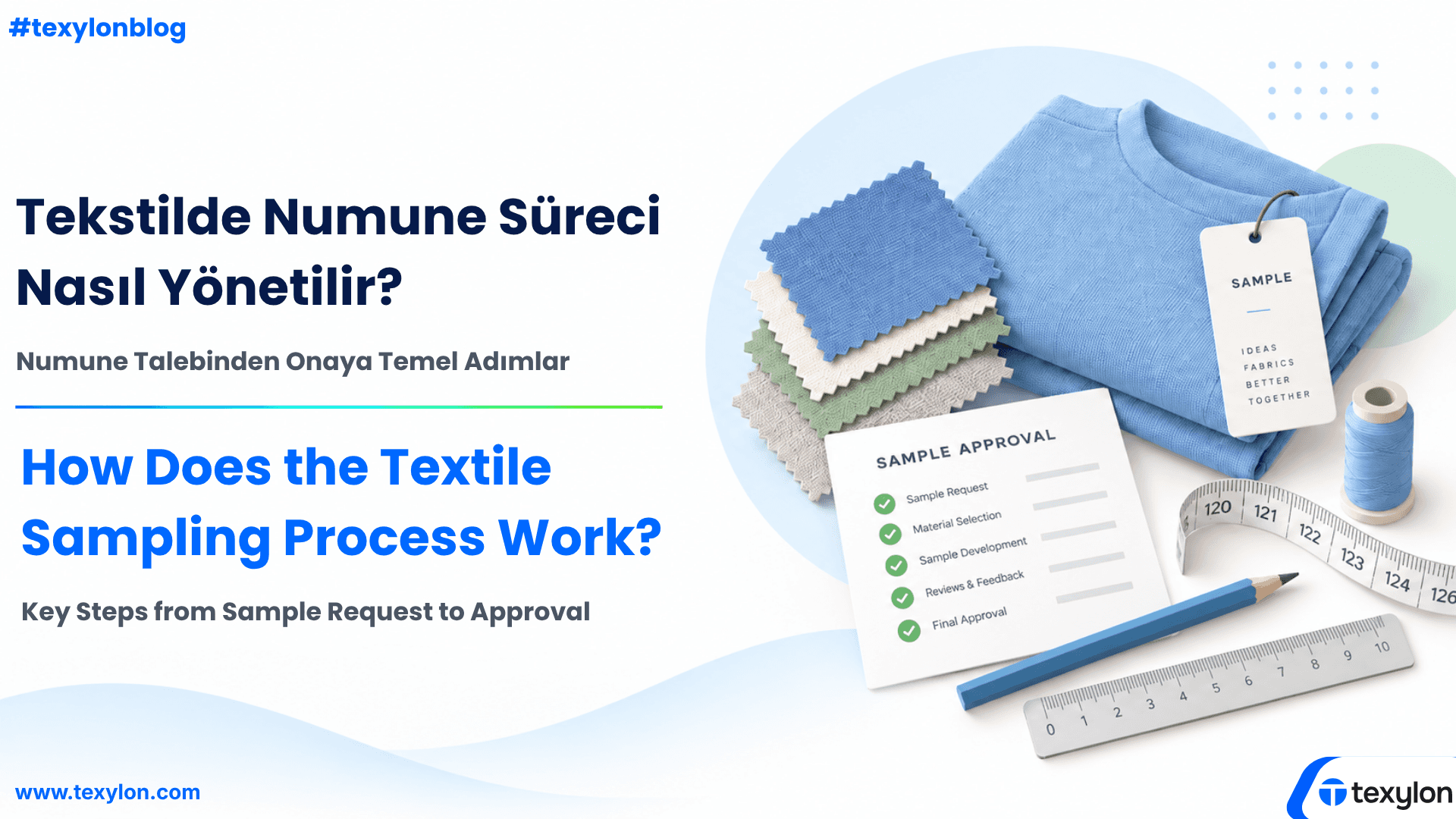
6. Why is Sampling Crucial in Private Label Manufacturing?
Sampling allows for the evaluation of whether the product aligns with the brand's expectations prior to transitioning to mass production.
Fabric, color, dimensions, stitching quality, print or embroidery details, labels, and the overall appearance of the product can be verified through the sample. Necessary adjustments can be communicated to the manufacturer before bulk production commences.
The sampling process also helps to identify any potential discrepancies between the brand's requirements and the manufacturer’s output at an early stage. Particularly for products involving custom patterns, fabrics, or designs, the approved sample becomes the agreed reference standard for bulk production between the parties.
7. What Information Should Be Sent to a Private Label Manufacturer?
When initiating contact with a manufacturer, simply stating "we are looking for a private label manufacturer" is insufficient. For the manufacturer to accurately evaluate the project, product specifications must be communicated as clearly as possible.
Information regarding product type, fabric composition and weight, colors, size distribution, estimated order volume, target delivery date, print or embroidery details, as well as labeling and packaging requirements should be shared.
If available, technical drawings, measurement charts, design files, or reference images will also assist the manufacturer in understanding the request more accurately.
Sharing this information systematically within an RFQ (Request for Quotation) facilitates the manufacturer's ability to provide more accurate pricing, production terms, and lead times.
It should also be taken into consideration that an initial price quote obtained while product details are incomplete may change once technical requirements and customizations are finalized.
8. Why is the Lowest Price Insufficient in Private Label Manufacturing?
While price is an important criterion, it is not sufficient on its own to determine the right manufacturer.
A manufacturer offering a lower price may have a higher MOQ, their lead times may not align with the brand’s timeline, or they may be unable to provide the required customizations. Requirements such as labels, packaging, custom fabrics, or sampling can also alter the total cost.
Therefore, proposals should not be evaluated solely on unit price, but rather in conjunction with quantity, quality, lead times, production capacity, customization options, and other commercial terms.
9. Searching for a Private Label Manufacturer on Texylon
The right alignment in private label manufacturing begins with the brand clearly defining its requirements and the manufacturer accurately presenting its production capabilities.
Texylon brings together textile buyers, manufacturers, and suppliers within the same global network. Companies seeking private label manufacturing can explore various manufacturers and establish direct connections with firms that may meet their needs.
In this context, the objective is not to reach as many manufacturers as possible, but rather to identify potential business partners that are suitable in terms of product range, production capacity, MOQ, customization options, and other requirements.
Consequently, when searching for a manufacturer, one can evaluate not only the question "Can this firm produce the item I want?" but also whether the production terms, order volumes, and services offered align with the requirements of the brand.
Frequently Asked Questions
What is Private Label?
It is the practice where a manufacturer produces goods on behalf of another company or brand, and the product is offered for sale under the ordering brand's name.
Do I Need to Have My Own Design for Private Label?
Not necessarily. While some manufacturers can customize existing products with details such as labels, colors, logos, or packaging, others can also offer custom product development and manufacturing options tailored to the brand.
Is There an MOQ in Private Label Manufacturing?
Generally, yes. MOQ can vary based on product type, fabric, colors, level of customization, and the manufacturer's operating model. Distinct minimums per color or per style may also be applied.
Are Private Label and OEM the Same Thing?
Not exactly. OEM generally refers to manufacturing carried out according to the design or technical specifications determined by the brand. Since the scope of service in private label manufacturing can vary by manufacturer, it is important to clarify precisely which phases the manufacturer will undertake.
Conclusion
At the core of a successful collaboration in private label manufacturing lies the precise alignment between the brand's expectations and the manufacturer's capabilities.
When product experience, MOQ, production capacity, quality standards, customization options, and delivery terms are evaluated collectively, a more accurate manufacturer selection can be achieved, not only for the initial order but also for a long-term partnership.
The right private label manufacturer is not the one offering the lowest price or possessing the highest capacity, but the one that can respond appropriately to the brand's product, volume, quality, and production expectations.