Only verified buyer and supplier
How to Find a Textile Supplier: 10 Criteria for Selecting a Reliable Manufacturer
/
A 6-Minute Read
Make more informed purchasing decisions with 10 essential criteria to consider when evaluating reliable textile manufacturers.

10 Criteria for Selecting a Reliable Manufacturer
In the textile industry, finding a business partner who can manufacture a product to the required quality standards, at the right time, and under sustainable conditions is as critical as finding the product itself. Although thousands of textile manufacturers are accessible on the internet, identifying the correct supplier among these companies is not always straightforward.
A professional website, an extensive product collection, or a competitive price quote alone does not guarantee that a company is reliable. Production capacity, technical expertise, minimum order quantity, quality standards, certifications, lead time performance, and communication approach must be evaluated collectively.
Consequently, there is no single answer to the question "How to find a reliable textile supplier?". The correct selection can only be made by clearly defining the requirements, verifying the manufacturer, carefully managing the sampling process, and comparing different offers based on the same criteria.
In this guide, we address the 10 fundamental criteria to consider when selecting a textile supplier.
Define Your Requirements Before Initiating Your Search
The initial step in finding the right textile supplier is not researching manufacturers, but rather defining the required product as clearly as possible.
General expressions such as "We are looking for cotton fabric" or "We are looking for a t-shirt manufacturer" may result in receiving numerous unsuitable proposals. In order for the manufacturer to provide accurate pricing and evaluate their production capability, the technical specifications of the product must be specified.
A fabric sourcing request should, if possible, include the following information:
Fabric type and composition
Woven or knitted structure
Weight (GSM) and width
Color, pattern, and finishing specifications
Area of application
Required certifications
Order quantity
Sampling requirements
Delivery date and destination country
Preferred delivery terms (Incoterms)
In apparel manufacturing, in addition to these, technical specifications (tech packs), size charts, stitching details, accessories, print or embroidery details, and packaging expectations must be shared.
Clearly specifying product details during the process of sourcing fabric or yarn suppliers prevents receiving irrelevant proposals from companies.
The more clearly requirements are defined, the easier it becomes to find the appropriate textile manufacturer and compare the proposals received.
1. Analyze the Manufacturer's Actual Field of Expertise
Not every textile manufacturer is specialized in the same product category or production model. While a company may be strong in woven fabrics, another may specialize in knitted fabrics, yarn, technical textiles, home textiles, or apparel manufacturing.
Significant variations also exist within the same category. Some manufacturers excel in high-volume, standard orders, while others may operate more flexibly with low-volume, custom-designed, or technical products.
For this reason, answers to the following questions should be investigated:
In which product groups does the company specialize?
Have they manufactured similar products previously?
With which raw materials do they work?
Are they capable of custom manufacturing?
Do they offer product development support?
Is the target order quantity compatible with their business model?
The correct supplier is not merely the one capable of manufacturing the product, but the one who understands the technical details of the requirement.
2. Do Not Skip the Textile Manufacturer Verification Process
In international textile trade, one of the most critical steps is to verify that the company contacted after an RFQ is a legitimate and active business entity.
The following information can be analyzed during the textile manufacturer verification process:
Registered trade name and company registration records
Factory and office address
Corporate contact information
Up-to-date images or videos of the production facility
Machinery inventory
Number of employees and production capacity
Countries exported to
Certifications and references
For high-volume orders, a factory visit, a virtual facility tour, or an independent audit can be requested. It must also be verified that the company name, bank account, and information on the proposal are consistent with one another.
Connecting with verified textile manufacturers can accelerate the preliminary research process; however, project-specific technical and commercial evaluations must still be performed.
Corporate verification does not eliminate all risks, but it reduces the probability of operating with incomplete or incorrect information.
3. Evaluate Production Capacity Relative to Your Order
Production capacity is not solely related to the physical scale of the factory. The critical aspect is whether the company can manufacture your product in the desired quantity and within the specified timeframe.
A large-scale manufacturer may not be suitable for small, highly frequent orders. Conversely, a smaller manufacturer, despite working flexibly, may pose a lead-time risk for high-volume orders.
Therefore, in addition to the total monthly capacity, the following topics should be inquired about:
The capacity that can be allocated specifically to your order
Current capacity utilization rate
Lead-time status during peak seasons
Whether subcontractors are utilized
Raw material lead times
Capacity continuity for repeat orders
The actual capacity that can be dedicated to your order is far more important than the manufacturer's declared total capacity.
4. Compare Minimum Order Quantities and Flexibility
The minimum order quantity, or MOQ, is one of the decisive criteria in selecting fabric suppliers and in apparel manufacturing.
MOQs may be determined due to technical constraints such as raw material procurement, dye lot sizes, machine setup, and production waste. Consequently, a low MOQ is not always the most advantageous option.
Information regarding MOQs per product or color, sample production costs, repeat order quantities, and the additional costs of production below the MOQ should be obtained from the supplier. It is also advisable to inquire whether different colors can be combined within the same order and whether stock service options are available.
Particularly for emerging brands and boutique collections, manufacturing flexibility can become more critical than the unit price.
5. Verify Quality Management Systems and Certifications
A manufacturer's approach to quality should not be assessed solely by whether they inspect the final product. The entire process, from raw material inspection to in-line production controls and final inspection, must be evaluated.
Depending on the product group and target market, certifications such as OEKO-TEX, GOTS, GRS, OCS, RCS, ISO, or social compliance audits can be requested. However, viewing a certification logo is insufficient. The entity name and facility under which the certificate was issued, its validity date, scope, and license number must be verified.
The following questions can also be directed to the manufacturer:
At which stages of production are quality controls performed?
Which laboratory tests are conducted?
What are the acceptable quality tolerances (AQL)?
What procedure is followed for non-conforming products?
Can quality control reports be shared?
Not every project requires the same certification. First, the requirements of the target market and the customer must be clearly established.
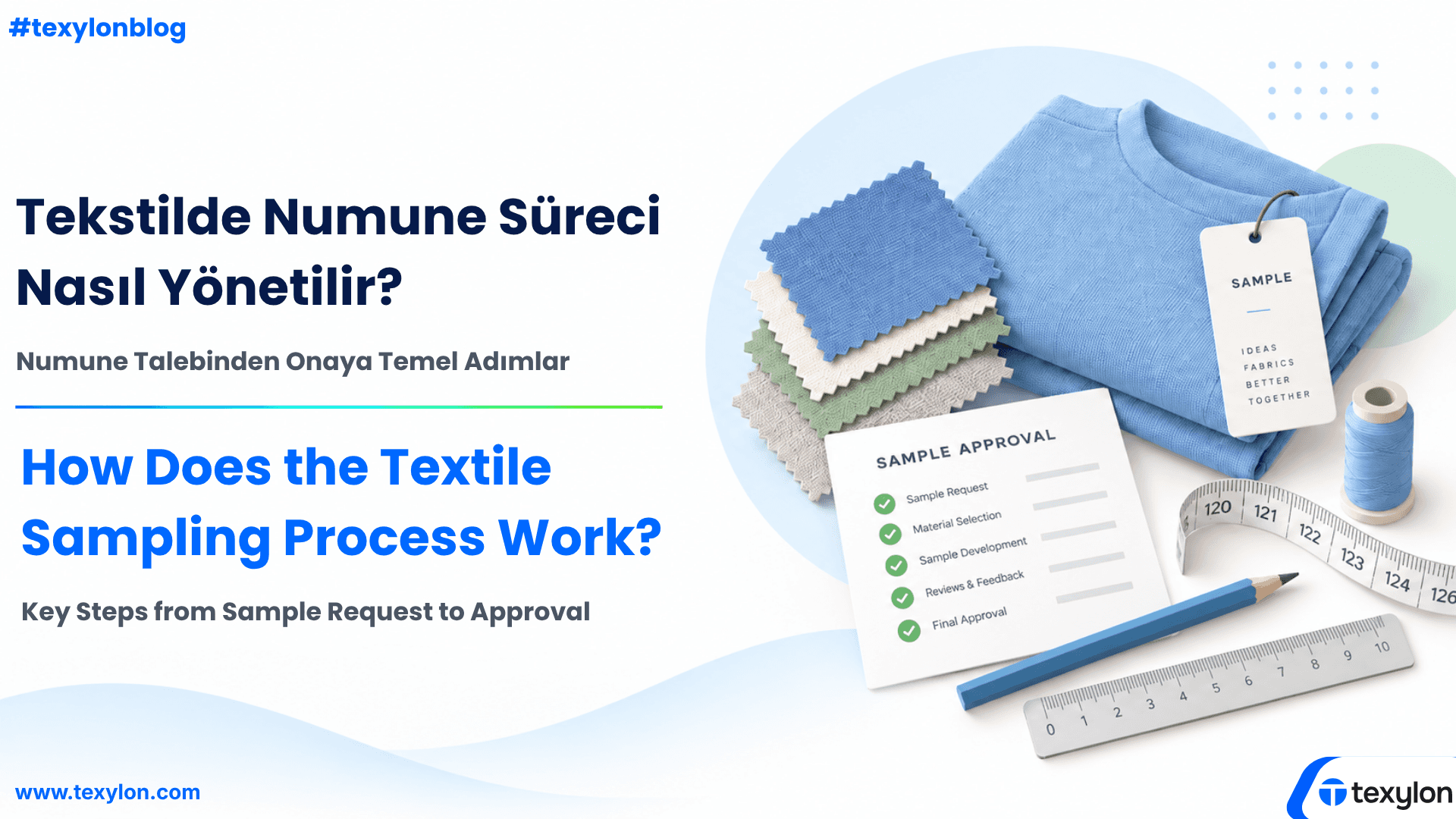
6. View the Sampling Process as a Production Test
A sample is not utilized merely to evaluate the color or appearance of a product. It simultaneously provides critical information regarding the manufacturer's technical capability, communication discipline, and attention to detail.
During the sampling stage, it should be observed whether the manufacturer accurately understands the technical instructions, raises necessary questions in a timely manner, and how they approach revisions. Material quality, dimensions, color match, handfeel, workmanship, and delivery lead time must also be evaluated.
The first sample not being flawless does not necessarily indicate that the manufacturer is incompetent. In custom development projects, revisions may be required. The key is for the company to comprehend feedback accurately and implement the necessary corrections systematically.
The approved sample should subsequently be archived as a reference seal for bulk production.
7. Compare the Complete Offer, Not Just the Price
In textile sourcing, the lowest price does not always translate to the lowest total cost of ownership.
Even if two proposals appear to be at the same price level, raw material quality, MOQ, delivery terms, payment terms, packaging, testing costs, and production lead times may vary. Therefore, proposals should be collected in a standardized format.
The following elements should be evaluated collectively during comparison:
Unit price and currency
Validity period of the quotation
Minimum Order Quantity (MOQ)
Sampling and development costs
Packaging specifications
Testing and certification costs
Delivery terms (Incoterms)
Production lead time
Payment terms
Freight and customs clearance costs
When requesting quotes from fabric manufacturers, identical composition, weight, width, color, finish, and quantity details must be sent to all companies. Otherwise, technically distinct products would be compared.
An RFQ (Request for Quote) system facilitates receiving proposals from multiple manufacturers under identical conditions and enables a more objective evaluation of results.
8. Inquire About Lead Times and Logistical Capabilities
Even if a product is of high quality and competitively priced, it loses its commercial value if not delivered on time. Lead-time performance is of critical importance, particularly in projects aligned with specific seasons or collection launch dates.
When evaluating production lead times, raw material sourcing, sample approval, pre-production preparation, bulk manufacturing, quality control, packaging, and transit times must be analyzed collectively.
The company's historical on-time delivery performance, capacity during peak periods, and how early they notify of potential delays should also be evaluated.
A good supplier is not a business partner that never encounters issues, but one that communicates potential issues in a timely manner and proactively generates solutions.
9. Evaluate Communication Quality as a Commercial Criterion
Textile production involves numerous technical details and approval stages. Therefore, the quality of communication directly impacts product quality and delivery performance.
When negotiating with a potential supplier, the following aspects should be observed:
Response time to inquiries
Level of comprehension regarding technical details
Ability to notice and inquire about missing information
Practice of obtaining written confirmation
Providing regular production status updates
Timely notification of issues
Accessibility to technical and commercial executives
A company that consistently responds late, shares contradictory information, or fails to confirm critical details in writing may cause more severe issues during bulk production.
10. Avoid Dependency on a Single Supplier
Securing a reliable manufacturer with whom you have worked for a long period is a significant advantage. However, placing all orders with a single company or region poses risks to the supply chain.
Capacity constraints, raw material shortages, logistical bottlenecks, or regional developments can disrupt production. Consequently, procurement teams must establish alternative textile suppliers.
Sourcing alternative suppliers does not imply replacing your current business partner. The objective is to build a broader network of qualified manufacturers that can be utilized when necessary.
The process of finding alternative textile suppliers should not be initiated only when an urgent need arises, but should be managed as a regular component of procurement strategy.
This approach mitigates supply risk, grants access to diverse manufacturing capabilities, and provides more options in terms of price, capacity, and lead times.
How Do Digital Textile Platforms Facilitate the Sourcing Process?
Traditional supplier research is predominantly conducted through trade fairs, personal networks, search engines, emails, and Excel spreadsheets. While these channels remain valuable, identifying manufacturers and comparing company profiles on a global scale can be time-consuming.
An industry-specific textile sourcing platform facilitates the systematic analysis of companies' product groups, manufacturing capabilities, capacities, and corporate records.
Through digital platforms, procurement teams can discover manufacturers in different countries, establish alternative suppliers, initiate RFQs, and compare incoming proposals more efficiently.
Nonetheless, digital platforms do not completely replace commercial evaluation. Sampling, technical meetings, certification verification, and, where necessary, factory audits retain their importance. The contribution of technology is to expedite finding the right companies and to ensure more structured process management.
Expand Your Global Textile Supplier Network with Texylon
Texylon is a global B2B textile sourcing platform that connects textile buyers, manufacturers, and suppliers.
Through the platform, companies operating in yarn, weaving, knitting, apparel, home textiles, accessories, and other textile categories can be discovered. Procurement teams can examine manufacturers matching their requirements and request quotes from relevant suppliers by creating RFQs.
This allows companies to access a broader global network of textile suppliers rather than being limited strictly to their existing connections.
The objective of Texylon is not to substitute commercial evaluation, but to facilitate the process of matching the right buyer with the right manufacturer. In the textile industry, a successful partnership is built not merely on price, but on technical alignment, transparency, trust, and sustainable communication.
Conclusion
The right textile supplier is a business partner who understands your requirements, can meet your technical expectations, shares production capacity transparently, and can consistently deliver the promised quality and lead times.
Consequently, supplier selection should not be reduced merely to a price comparison. Manufacturing expertise, corporate verification, capacity, MOQ, quality systems, sampling performance, delivery capability, and communication approach must be evaluated collectively.
Asking the right questions, obtaining standardized quotes from multiple manufacturers, and establishing a robust network of alternative suppliers form the foundation of a more secure textile sourcing process.
Find the right manufacturer. Compare quotes. Expand your sourcing network.
Frequently Asked Questions
How to find a reliable textile supplier?
Company records, factory address, production capacity, machinery inventory, certifications, and references must be verified. A sampling process should be conducted prior to bulk orders; when necessary, factory visits or independent audits should be requested.
What should be considered when selecting a textile supplier?
Product expertise, capacity, MOQ, quality standards, sampling performance, pricing terms, lead times, logistics, and communication quality must be evaluated collectively.
What information should be provided when requesting a quote from a fabric supplier?
The fabric type, composition, weight (GSM), width, knit or woven structure, color, finishing treatments, order quantity, delivery date, and certification requirements must be clearly specified.
Why should quotes be requested from multiple manufacturers?
Acquiring multiple quotes allows for the comparison of price, quality, MOQ, lead times, and payment terms. It also minimizes the risk associated with dependency on a single manufacturer by establishing alternative suppliers.
Open Your TEXYLON Account!