Only verified buyer and supplier
The Digital Guide to Finding Buyers for Textile Manufacturers
/
5-Minute Reading
Discover ways to generate new business opportunities by enhancing your digital visibility.
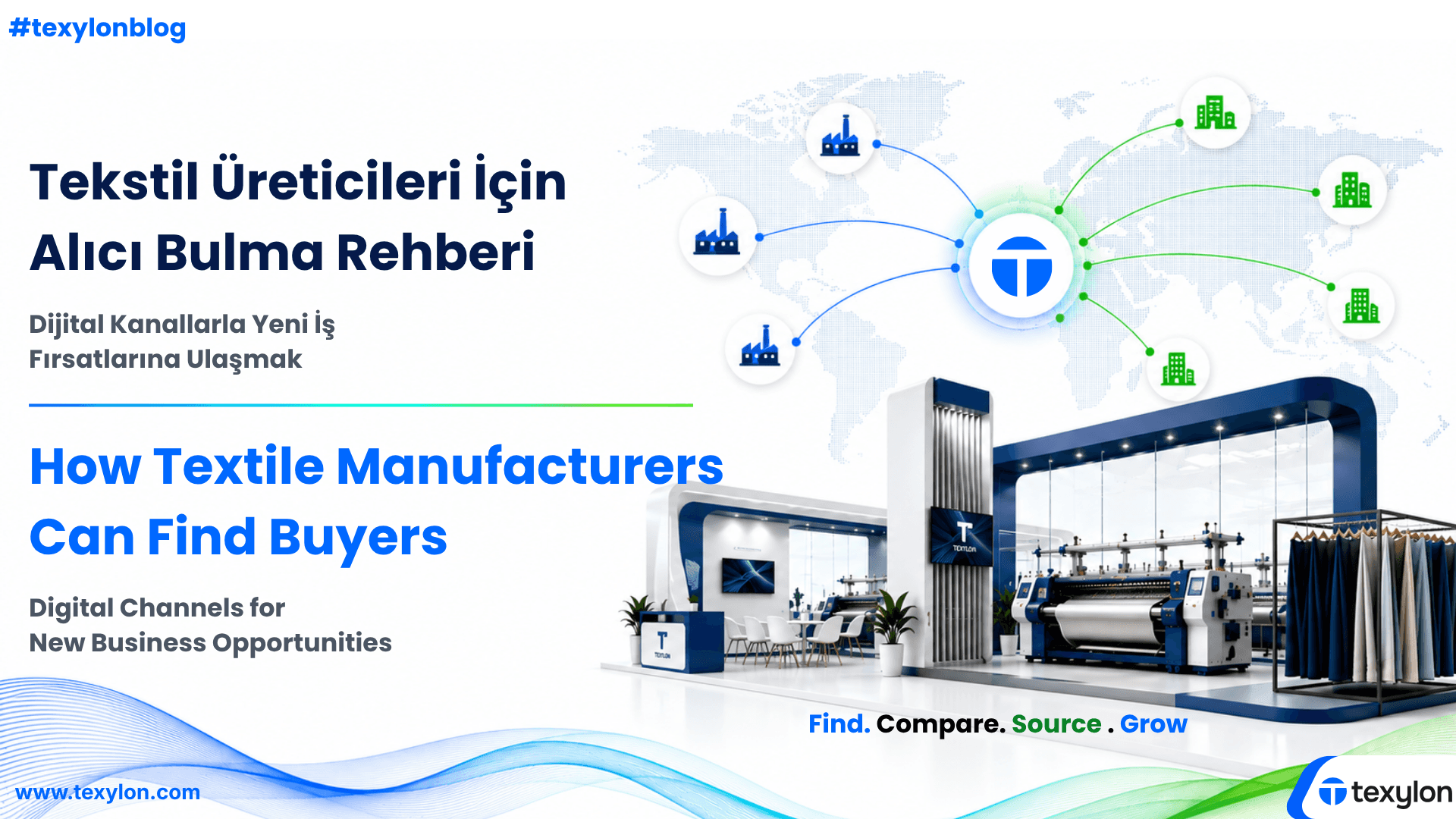
B2B Export Beyond Trade Fairs: How Can Textile Manufacturers Reach New Buyers?
In the textile industry, possessing high production capacity, superior quality standards, and competitive pricing policies no longer guarantees success in today's global market on its own. You may have the most advanced machinery park; however, if purchasing managers in your target market, global fashion brands, or wholesale buyers are unaware of your existence, your capacity is destined to remain below its potential. The process of finding new customers in textiles is now shifting beyond traditional reference networks, being built entirely upon digital visibility, B2B marketing, and digital brand awareness.
The textile supply chain is, by nature, built upon trust and established habits. To minimize delivery risk, global buyers generally prefer to continue working with manufacturers they have previously collaborated with, whose sampling processes they know, and whose communication quality they trust. However, remaining constantly dependent on the same suppliers causes brands to miss out on innovative fabric technologies, cost-effective alternatives, and flexible production solutions. On the other hand, hundreds of textile manufacturers with high manufacturing capabilities struggle to expand beyond their existing customer portfolio due to a lack of access to the correct B2B channels.
The Limits of Traditional Channels: Are Trade Fairs and Cold Emails Sufficient?
Directly sending promotional emails (cold e-mails) and participating in international textile trade fairs are among the most common methods used by textile firms wishing to expand into new export markets. However, utilizing these methods in isolation remains insufficient in today's marketing dynamics:
Low Conversion Rate of Promotional Emails: Reaching the correct purchasing manager at the correct company is extremely difficult. Even if your message reaches the right person, it may not align with the products the buyer is searching for during their current collection period, or the firm may be bound to its existing supplier agreements.
Limited Fair Periods and High Costs: International textile trade fairs still play a critical role in terms of examining products by touch and establishing face-to-face trust. However, an exhibition lasts only a few days a year, requires substantial stand and accommodation budgets, and having buyers discover you among hundreds of stands in a limited timeframe is left entirely to chance.
Strategic Note: The objective is not to completely abandon traditional trade fairs or bilateral meetings. The actual strategy is to support these physical contact points with a digital visibility infrastructure that operates continuously 365 days a year.
What Should the Buyer See Upon Finding You? Effective Digital Profile Management
Being searchable in search engines or on B2B textile platforms is just as vital as the quality of the content the buyer encounters upon reaching your profile. Rather than reading long and complex introductory texts, global purchasing experts focus on clear technical data that will enable them to make quick decisions.
Essential Information Required on a Textile Manufacturer Profile
The fundamental questions a buyer seeks answers to within the first 30 seconds of visiting your profile are as follows:
Area of Expertise: In which of the fields of fabrics, yarns, ready-to-wear (apparel), or home textiles has the firm established deep specialization?
Production Capacity and MOQ: What is the monthly and annual production volume? What is the minimum order quantity (MOQ)?
Certifications: Does the company possess international environmental and social compliance certificates such as OEKO-TEX, GOTS, GRS, ISO, Sedex, or BSCI?
Export History: To which countries and to which segments (luxury, mid-market, fast fashion) has the firm previously exported?
Technical Details: Are the yarn count, fabric weight, composition, width, or dyeing/finishing processes clearly specified?
Incomplete information or low-quality product photographs lead to even the most robust manufacturers being eliminated during the digital evaluation stage. For instance, it is insufficient for a fabric manufacturer to simply list "Knitted Fabric." The weight of the fabric in GSM (Grams per Square Meter), the cotton/polyester ratio, the knit type (single jersey, two-thread fleece, interlock), and the area of application must be explicitly stated. Yarn manufacturers must print twist and color options; whereas apparel manufacturers must transparently showcase their pattern development capacities and sewing standards.
Turning Idle Stocks into Opportunities: B2B Stock Marketing and Fast Fashion
In textile manufacturing, stocks remaining in warehouses due to cancelled orders, overproduction, or collection changes are frequently encountered. Most of the time, these products are viewed as a burden that generates storage costs and ties up the firm's cash flow.
However, through a well-designed digital vitrine, a stock fabric or garment that is idle for you can transform into a life-saving sourcing solution for another fashion brand. Particularly for buyers operating within a fast-paced (fast fashion) framework who wish to minimize lead times, ready stocks offer an unparalleled advantage.
Detailed Stock Lists: When moving your stock products to B2B platforms, you must transparently present their composition, color card, available yardage/quantity, technical specifications, and warehouse location details.
Continuous Customer Acquisition: B2B communication that begins solely with the intention of selling stock can pave the way for long-term and high-volume master purchase agreements once product quality and delivery speed are proven.
Submitting Offers to the Right Inquiries Instead of Searching for Customers: The RFQ System
In traditional marketing, manufacturers continuously chase buyers. In the digital B2B ecosystem, this process can operate in reverse. The RFQ (Request for Quotation) mechanism directly connects global buyers with active purchasing needs to manufacturers with available capacity.
In the RFQ system, buyers upload the technical details, budget, quantity, and targeted delivery date of the textile product they require. As a manufacturer, you can quickly submit price and sample proposals by selecting inquiries that align precisely with your area of expertise.
Strategic Tip: Submitting quotes for every RFQ request can lead to a waste of resources. The secret to success lies in focusing solely on high-quality inquiries where your production infrastructure, minimum order quantity, and lead times are fully aligned.
Building Trust Prior to the First Contact: Verified Company Profile
On digital B2B platforms, a buyer liking a product is not sufficient on its own to secure an order decision. International buyers seek to verify whether the supplier operates a physical factory, the authenticity of their production capacities, and their adherence to sustainability norms.
Verified Manufacturer Badges: Prove your company's official commercial existence by completing the verification steps on B2B platforms.
Sustainability Certificates: In today's textile world, organic (GOTS) and recycled (GRS) material certificates and social compliance reports (Sedex, BSCI) are as decisive a criterion as price.
Genuine Production Visuals: Sharing high-quality, genuine photography of your factory, production lines, and products instead of representative stock images exponentially increases digital trust.
TEXYLON: A B2B Marketplace and Export Engine Dedicated to the Textile Sector
Precisely at this juncture, TEXYLON modernizes export processes by bringing textile manufacturers and international purchasing professionals together in a collaborative digital ecosystem.
Unlike generic B2B platforms, TEXYLON is designed solely according to the dynamics of the textile sector, allowing manufacturers to set up their digital storefronts, showcase fabric and yarn technical details comprehensively, and offer their idle stocks to the global market.
Advantages Provided by the TEXYLON Platform
Industry-Specific Filtering: Buyers can search by composition, weight, knit type, or certification; thereby allowing manufacturers to stand out precisely based on the criteria being sought.
Advanced RFQ Pool: The opportunity to gain instant access to current purchasing requests from global brands and wholesalers, and to submit quotes directly.
365-Day Continuous Visibility: Unlike trade fairs that last only a few days a year, a digital showroom infrastructure operating 24 hours a day.
Stock Management and Additional Revenue: The opportunity to accelerate cash flow by bringing warehouse stock products together with fast fashion brands.
Conclusion: Take Your Place in the Future of Textile Exporting
As competition in the global textile market intensifies daily, merely producing high quality is no longer sufficient. The key to success is the ability to present your value-added products directly to the right buyer who requires that exact product at that precise moment.
By blending your traditional trade fair participation and existing bilateral relations with the digital visibility, RFQ dynamism, and verified profile trust offered by B2B textile platforms such as TEXYLON, you can multiply your export potential. Existing in the digital world does not merely mean being present; it means being discovered by the correct buyer with the correct technical details.